
WHAT VOIP MEANS
A More Flexible Way to Handle Business Calls
With VoIP, your phone system is no longer tied to a traditional landline. Calls can be handled through desk phones, computers, mobile devices, and cloud-based tools that make communication easier to manage.
This gives your business more flexibility, better call features, and the ability to support office teams, remote workers, and multiple locations from one connected system.
Uses Your Internet Connection
VoIP sends and receives calls through your internet service instead of traditional copper phone lines.
Uses Your Internet Connection
VoIP sends and receives calls through your internet service instead of traditional copper phone lines.
Adds Modern Call Features
VoIP supports features like call routing, voicemail-to-email, call recording, mobile access, and more.

VoIP vs Traditional Phone Systems
Traditional phone systems can be expensive, limited, and harder to manage. VoIP gives businesses more flexibility by using the internet to support calling, routing, voicemail, remote access, and modern communication tools.

Traditional Phone Systems
- Often tied to physical phone lines
- Can be harder to manage across locations
- Limited flexibility for remote workers
- May require more hardware or manual changes
- Fewer built-in modern communication features

VoIP Business Phone Systems
- Uses your internet connection for business calls
- Works with desk phones, computers, and mobile devices
- Supports office, remote, and multi-location teams
- Includes features like routing, voicemail, and recordings
- Easier to adjust as your business grows
BUSINESS VOIP BENEFITS
Why Businesses Choose VoIP Phone Systems
VoIP gives businesses more control, flexibility, and features than traditional phone systems, while helping teams stay connected from the office, home, or on the go.

Lower Phone Costs
VoIP can help reduce unnecessary phone expenses by using internet-based calling and flexible service options designed around your business needs.

More Flexibility
Your team can make and receive business calls from desk phones, laptops, mobile devices, and supported cloud phone tools.

Better Call Features
VoIP supports features like call routing, voicemail-to-email, call recording, call forwarding, and business-hours call handling.

Easier to Grow
Add users, devices, extensions, and locations as your business changes without relying on outdated phone infrastructure.
HOW VOIP WORKS
How Internet-Based Calling Works for Your Business
VoIP may sound technical, but the idea is simple: your voice calls travel through your internet connection and connect your team across phones, computers, mobile devices, and cloud-based tools.
1. Make or Receive a Call
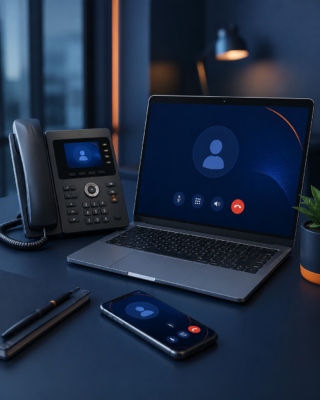
Your team uses a desk phone, laptop, mobile device, or supported VoIP app to handle business calls.

2. Calls Travel Through the Internet
Instead of relying on old phone lines, VoIP sends call data through your internet connection and cloud phone system.

3. Calls Reach the Right Destination
Calls can be routed to a person, department, device, voicemail, or location based on your business call flow.
IS VOIP RIGHT FOR YOUR BUSINESS?
VoIP Is a Smart Fit for Growing, Flexible Teams
If your business depends on clear communication with customers, staff, vendors, or multiple locations, a VoIP phone system can give you more control, flexibility, and useful features than a traditional phone setup.

VoIP may be right for you if your business needs:
- Lower monthly phone costs
- Better call routing and call handling
- Remote or mobile phone access
- Support for multiple users, departments, or locations
- Voicemail-to-email, call recording, or call forwarding
- A phone system that can grow with your business
The VoIP Pros can review your current phone setup and help you understand what kind of cloud phone solution makes the most sense for your team.
Not sure where to start? We can help you compare your current phone setup with a modern VoIP solution.